Midsummer mitherings
Angus Soutar
This year the gardens are still growing well in the north of England, in spite of a late start to the growing season. But events far away from our home region are storing up trouble for the coming winter.
The worst fears of our spring editorial are playing out. In recent events, the ceasefire in the Iran war appears to be breaking down. Looking again at that chokepoint in the six continent global supply chain that is the Strait of Hormuz. we can see that vital materials are still not getting through and out into the wider world.
On 10th July this year (2026), a drone struck a Qatari LNG tanker, the Al Rekayyat before it could get through the Strait. Last year, 60 tankers crossed the Strait of Hormuz on July 10. This year, only two got through on that day.
On 11th July Qatar paused its push to increase output at the Ras Laffan LNG complex following the breakdown of peace talks.
At the same time, Chris Martenson reported that while media attention was on the Strait, from July 8th to July 10th, Ukrainian drones successfully attacked and reportedly destroyed at least 30 Russian tankers in the Sea of Azov. "This is notable because it represents an enormous ecological and soon human disaster for the region." Ukrainian attacks on Russian refineries are continuing.
Up to now, Russia has been a major exporter of both crude oil and refined oil products, especially diesel, petrol and jet fuel. Russia has now halted all diesel exports to the rest of the world.
"This is the most significant energy shock that we have ever seen. Build up your resilience buffers."
Chris Martenson
This suggests that diesel is about to get a lot more expensive, everywhere, and quickly. As I write, pump prices here, having eased on the announcement that hostilities were over, are now going up again. If you are still unaware of the importance of diesel fuel to our civilisation, please pay more attention (you could start by revisiting our spring issue). Our world still runs on diesel and just about everything that most people buy still depends on it.
Further concerns involve the rival government in Yemen who are attacking Saudia Arabia and threatening shippling passing through Bab-el-Mandeb, the gateway to the Red Sea and the Suez Canal. Many ships are now diverting via longer and more expensive routes.
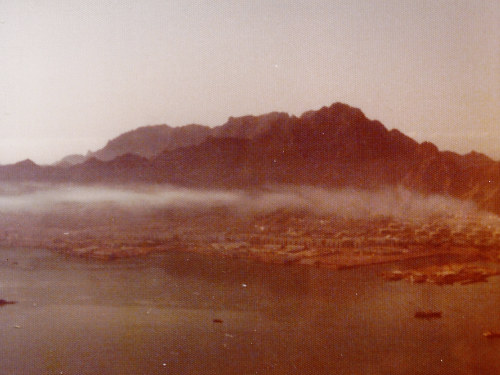 |
| Aden - strategic port in Yemen to the east of Bab-el_Mandeb |
 |
The shocks are beginning to ripple through. The rumbles of thunder get closer.
On 11th July, China banned helium exports As reported in our spring issue. Helium is a vital material for the computer industry and for hospital equipment. Qatar produced an estimated 63 million cubic meters of helium in 2025, close to one-third of estimated world production, according to the USGS. This disruption is therefore a worldwide rather than regional problem.
Earlier this year the Oregon Group reported that the price of copper 10 years ago was $4500 per ton and is now $13500. Copper is an essential material for electrification projects and for data centres. Demand is predicted to rise 50 per cent AI roll out and for the expansion of electricity grids. Production from the copper mines this year will be affected by the availability of diesel and also sulphuric acid which is currently still not coming through the Strait.
While I was putting finishing touches to this article, The Hormuz Letter reports that Iran has struck the Kuwait National Petroleum Company North Pier crude oil export facility at the Mina Al Ahmadi hub on the Gulf, with the damage visible from satellites in space...
In other news, I have also been monitoring the state of electricity supply in the UK. I intend to write something about my concerns in this year's autumn issue, but I am already alarmed at some of the incidents that have been reported during the last few weeks. Much like the Railways here, the problems are often blamed on the season ("leaves on the line", or in this case, the hot and sunny weather). But the root cause appears to decades of poor (or no) decisions about our national energy security.
Net Zero is an admirable goal, but the policies are environmentally and socially damaging. The proposed cure will be worse than the disease. It is becoming clear that the UK "Net Zero" policy is an enterprise led by ideologues who refuse to listen to the engineers and financiers who have been asked to deliver it, let alone us permaculture designers and farmers who are effecting fossil fuel reduction "on the ground".
It's still summer and most of us need to take a break and enjoy the good weather. But let's not take our eye off the preparations that we may need to make as the year gets older.
 |
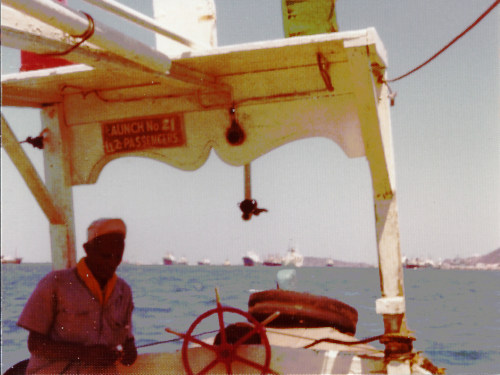 |
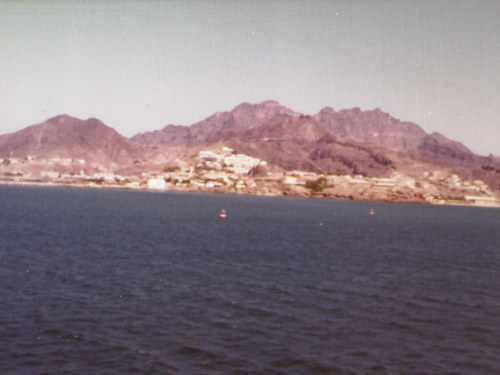
| Aden from a Greek tanker at anchor, 1975 | Going ashore to Aden in "Launch 21, 12 passengers", 1975 |
 |
|