Vulnerability - Broken links
Angus Soutar
Like many of you, I have been kept busy this spring, although my productivity is low. We have had a wet spring here with little sun and it has been a struggle to get out in the garden, let alone to get plants going.
As I write, there is a war going on in the Persian Gulf. The Strait of Hormuz has been closed for shipping for six weeks with no sign of opening up again any time soon. I am paying attention, but not to the headlines (I am of the firm belief that the truth is the first casualty of any war). The reduction in global oil supply is significant but that is not the most important part of the story. Nearly everything that is produced in the Gulf is shipped through the Strait. It is a major chokepoint in the interconnected system of global trade that supplies key raw materials to industries right across the world.
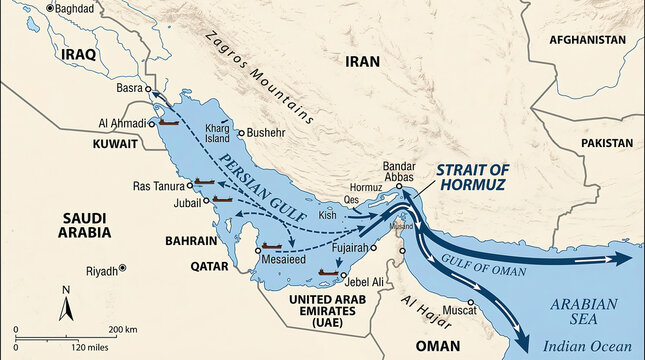 |
| Credit: Adobe Stock |
 |
Once again in this decade, there will be a significant disruption to our finely-tuned system of global supply lines, with unpredictable results. This may not be a knock-out blow that breaks the system, but it could well weaken its resistance to future shocks.. It distresses me that I may have to deal with fall-out from trouble over 3000 miles away. But hey, this is globalisation.
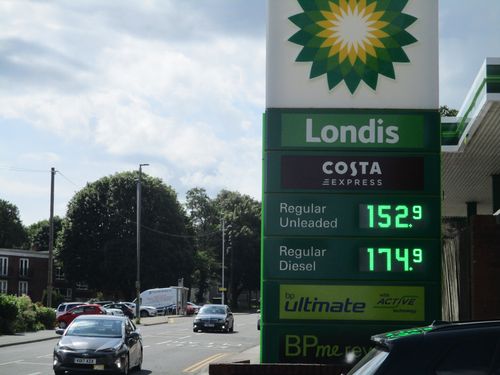
Here in the UK, we still have plenty of petrol refining capacity. But over the last few decades our Lords and Masters have presided over a collapse in in the ability of UK refineries to produce diesel. This is unfortunate, because the price of diesel will affect just about everything; the price of food in particular, with an impact all the way from farm (possibly a farm overseas) to our plates (with rising gas costs also working their way into the kitchen).
Some countries are already experiencing shortages of diesel. We have to hope that this will not happen here, but pump prices are reaching alarming levels. The position over jet fuel is even worse following the recent closures of the Linsey refinery in Lincolnshire and Grangemouth in Scoland. However, many of us for various reasons, have decided that we can go without jet travel so the diesel scenarios are the ones that have our attention.
Other countries may well increase production of crude oil although not all crudes are the same. Refineries are tuned to use a particular type. Meanwhile, governments have released "Reserves".
 |
|
Fuel disruption is not the only thing that we have to worry about. Lurking below the headlines, there are other potential shortages that could disrupt our lives here, even though they hit other countries first. The only thing that can be predicted at the moment is that there will be a lengthy delay in getting things "back to normal" as the shocks work their way through the system. Major supplies of raw materials for industry are now on the "wrong side" of the Strait and some of their production capacity has been reduced by war damage.
I have gone into more detail here but my conclusion is that we must prepare for shortages and prices rises. The nature of the beast is that we won't see consequences until later this summer. These things don't go on and off like a light switch. There are a significant lags in the system which I explore more in my article in this issue
Many people are ignorant of where their food comes from. Today, most of us are also unaware of where everyday items come from and have little idea of the tortuous paths that leads from raw material production to doorstep delivery. Permaculture addresses this ignorance through careful examination of the interconnectedness of it all.
The best time to prepare for disruption was last year. The second best time is now.
So, prepare for disruption. Let's hope the current problems will not be immediately debilitating for us personally and this will be just a rehearsal. But be ready: "panic early to avoid a scramble".
- Have a look at my earlier advice about food
- Squirrel away non-perishable provisions
- Preserve surplus fruit and veg (collect or buy glass jars etc)
- Make plenty of compost
- Try to make advance purchases of materials for projects - get materials (especially anything made of copper) into your possession now
- Read our recent winter editorial for further context.
In between times, I'm at my happiest when I'm out in the garden. Let's hope the weather improves!
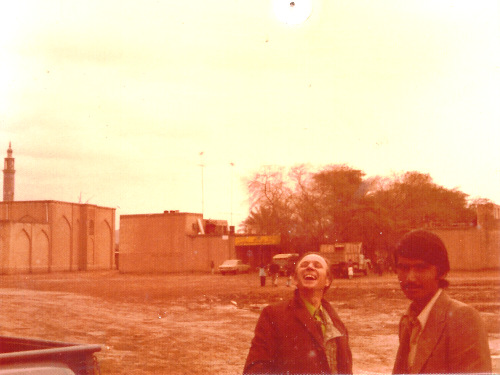 |
| Angus (behind the camera) with a mad dutch engineer and Iranian assistant, having a break from commissioning the original Bid Boland Gas Rifinery nearby in the desert in Iran, 1976. |
|
Read more from Angus about potential shortages caused by war in the Gulf.