Dire Straights?
Angus Soutar
I have already outlined some of the disruption caused by the war currently destroying chunks of Industry in the Persian Gulf - see our editorial in this issue of Northern Edge. Now I will follow up with more detail, taking a closer look at some of the consequences of a global, industrial society that favours efficiency over resilience. With he world's on-going dependence on fossil fuels and a hyper-connected global system of trade, what could possibly go wrong?
 |
 |
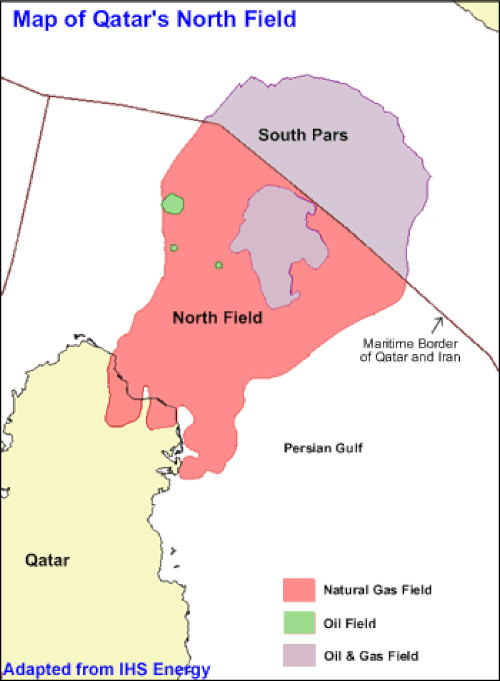
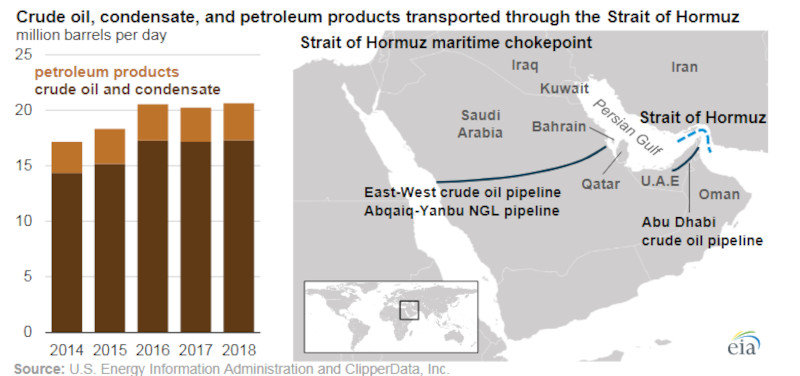
The Persian Gulf is straddled by the worlds largest natural gas field. The South Pars/North Dome field is owned Jointly by Qatar and Iran who are on opposite sides of the Gulf - and also the current conflict. Both countries exploit the gas, not only for export, but as a cheap source of energy for a number of heavy industries that produce a significant amount of raw material for the rest of the world's industries. All that material needs to pass through the Strait of Hormuz before it can be used elsewhere. The war has caused significant damage to those installations. Repairing them and restoring flows through the Strait of Hormuz will be neither quick nor easy. The longer the war goes on the more difficult it will become. It reminds me of watching a snagged woollen jumper slowly unravelling. The Australian business analyst Craig Tindale has written an eloquent and sobering essay on the brittle nature of international supply lines that the war has now revealed. It is well worth reading if you are interested in what the future might offer up to us.
The modern world order, having organized itself around efficiency, cost minimization, and logistical precision, has created a machinery of dependence so extreme that the interruption of one narrow corridor can propagate outward into a general crisis of civilization. What appears at first as a maritime blockade is in fact the exposure of the entire global system as a hierarchy of brittle interdependencies. Craig Tindale
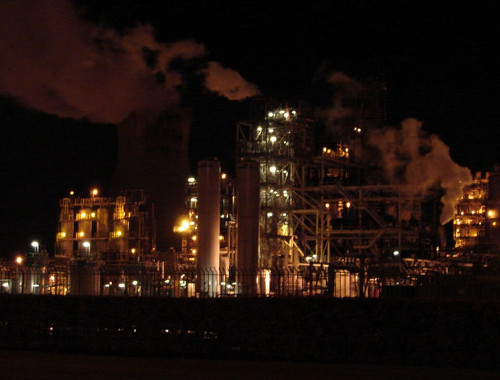
A specific example of the vulnerability of the global system was provided in March this year by the attack on the massive Ras Laffan complex that sits on top of the Qatar end of the North Dome/South Pars gas field. The damage was significant and could take months if not years to repair. The complexity and the time lag in the replacement of key components is highlighted in an article by Veron Wickramasinghe. The damage to the Air Separation Units is a case study in supply chain vulnerability, a parable for our modern times.
You may also read a good summary here.
 |
| US Department of Energy |
|
Natural Gas (Methane)
Since the Ras Laffan complex sits on top of apparently unlimited natural gas, it made perfect sense to use the energy from that gas to liquefy more of the gas so that it can be put into tankers as Liquefied Natural Gas (LNG) and shipped round the word. This is not a trivial undertaking and it employs some of the most advance engineering plant on the planet. Ras Laffan make a major contribution to the estimated 20 per cent of global LNG supply that come out of the Persian Gulf.
We are fortunate in the UK that we don't import a huge amount of LNG from Qatar's Ras Laffan. However, estimates are that the damage to the "Industrial City" have removed approximately 20% from expected global supply. So, guess what? In our highly integrated, sophisticated global system, UK natural gas prices are estimated to have risen by 10 to 15 percent. We are at the mercy of these international markets. In a further twist, in the UK, electricity prices are set by the price of gas.
Whereas the UK may experience price shocks from "The Market", we don't rely on the tankers from Qatar for our gas supply. EU countries, on the other hand, may experience supply problems on top of price hikes. French energy expert Patrick Pouyonne predicts: "The supply situation for EU countries is is critical. There is no global substitute for Qatar that arrives in time for winter 2026–27."
Fertilisers
It takes more energy to produce a tonne of ammonia (the raw material for nitrate fertilisers) than it does to produce a tonne of steel (which is already a highly energy-intensive process). Steel-making requires large amounts of energy to heat the blast furnaces. Nitrate fertilisers are something else. Those of you who have attended our Permaculture Design course may be familiar with the Haber Bosch process which is key to the production of artificial nitrogen-based fertilisers. Suffice it to say that this requires huge amounts of energy from gas to convert gas and air into nitrogen fertiliser, so it made perfect sense to locate production over the South Pars gas field.
These fertilisers are essential to global industrial-style agriculture that provides food for billions of people. And the supply from the Gulf is currently unable to get out through the Strait. Predictions are for a significant disruption to farming and at the very least prices will rocket
"It is called the Haber-Bosch process, and it is arguably the most consequential invention in human history, more important than the printing press, more transformative than the internet, more fundamental to the shape of civilization than nuclear weapons. Without it, the planet’s agricultural carrying capacity would support approximately four billion people. The current population is eight billion. The arithmetic is not subtle. Shanaka Anslem Perera
Sulphur
Crude oil from the Persian Gulf is classed as "sour": it has a high sulphur content, as does the natural gas associated with it. Sulphur is recovered as a byproduct of liquefied natural gas production. It made perfect sense to recover this valuable material and prepare it for export. (Most of the industries that use sulphur products do not exist in the Arabian Desert). Once sulphur is processed into sulphuric acid, it becomes vital for many key industries. Ras Laffan Industrial City is a critical global hub for sulphur production with a sophisticated terminal for specialised bulk-sulphur ships.
The Ras Tanura oil refinery in Saudi Arabia has also been hit . It is the world's largest crude oil export terminal. It is also a key source of sulphur. Both Ras Tanura and Ras Laffan are important sources of high-purity sulphur. In turn, sulphuric acid is important raw material in the production of phosphate fertilisers , in the mining industry and metal extraction. Those metals include copper, nickel, lithium, cobalt and uranium together with a plethora of rare metals. Costs of these materials are already rising rapidly and shortages may develop.
Anyone with a passing knowledge of engineering will see that the effect will be widespread: on electricity grids, solar panels, wind generators, electric cars (Net Zero...anyone?), also batteries and a whole host of electronic"devices". It all shines further light on "Net Zero"'s dirty secret: most of the "clean" technologies are dependent on "dirty" oil.
Shanaka Anslem Perera estimates that at the moment around 45 per cent of the world's sulphur cargo is laid up behind the Strait of Hormuz.
The war did not just trap the fuel. It trapped the chemical that mines the metals that were supposed to end the need for the fuel. The snake is eating its own tail. At Hormuz. Shanaka Anslem Perera
Diesel Exhaust Fluid
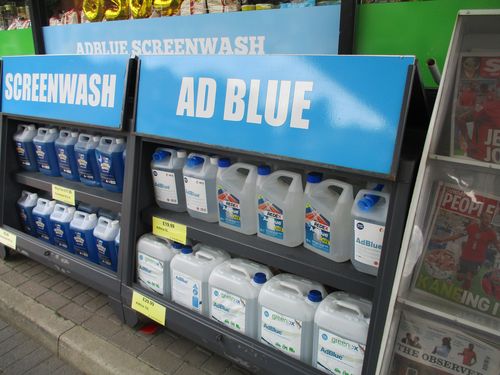
As if it were not bad enough for industries around the world to be suffering diesel shortages, modern diesel engines are required to run with an additive that reduces exhaust emissions. This additive is often named by the most popular brand "AdBlue". It is made from urea, which is one of the nitrogen compounds that is produced immediately above the Arabian gas fields, so it made perfect sense to produce the AdBlue there, too.
Pollution regulations require modern diesel engines to stop once the additive tank is empty. This includes most diesel cars and vans produced after 2015 - your engine won't start if you run out of AdBlue
Following the closure of the Strait, we are now seeing shortages of AdBlue.
 |
|
Polyester
Polyester makes up 59 per cent of total global fibre production. The raw materials for polyester are purified terephthalic acid (PTA) and monoethylene glycol (MEG). PTA is made from crude oil using a multi-stage process at the refineries. Saudi Arabia is a major exporter of PTA.
Iran is a major producer of MEG. MEG is synthesised from natural gas, so it made perfect sense for sites like Ras Laffan and also sites on the other side of the Gulf in Iran, to produce this key feedstock for the plastics industry,
Most of these materials are exported through the Strait so disruption has had an immediate effect on prices
Helium
Helium is another byproduct of LNG production. Qatar supplies around one third of total global production. Helium is a rare element that is now essential to the operation of a variety of modern technologies including the manufacturing of semiconductors (including the ubiquitous silicon chip), in hospitals (MRI scanners) and in hi-tech research. The semiconductor issues could impact on the development of data centres where AI is creating a massive increase in demand for semiconductors and storage devices, which also require helium.
There is a ready global market for helium, so it made perfect sense to liquefy the byproduct and export it from the Gulf. Helium is a gas that will only become a liquid at extremely low "cryogenic" temperatures which requires specialist equipment. As yet, no-one has found a way to store helium for longer than 45 days; it has a "low shelf life".
Brittle Interdependencies
From a point of view that considers energy efficiency and economic rationality as paramount, all these industrial and commercial decisions made perfect sense. "It seemed a good idea at the time". What makes no sense is for us to be so dependent on that production for many of the things that support our daily lives. Permaculture gives us the ability to move away from the fertiliser trap, the sulphur trap and all the other traps. We are shifting towards a more local way of life, towards independence, towards sovereignty.
We see the current difficulties as classic systems fault where there is a loss of diversity in the relationships that are holding the system together. Eventually it becomes brittle to a point where any sudden changes acting on it are liable to break it. The closure of the Strait is one of those sudden changes.
Whether the effect is just a temporary blip in world trade or the beginnings of a total unwinding of the global system, no-one can say at the moment. How long will the Strait remain closed? How long will it take to repair the war damage? Are there other critical raw materials to take into account? Are there other installations around the world that can ramp up production? How fast can this be done? What will be the financial impact on the world economic system? And where will the ripples of the various supply shocks finally die down?
The metaphorical chickens will still take months to come home to roost. At the time of writing, tankers are still at sea, companies and institutions have stockpiles that they can run down, governments will draw on their strategic petroleum reserves. However, all the emergency actions could make the trade system even more brittle and less likely to withstand the next shock.
Meanwhile, I have seen an illuminating flash of lightning from the war. But I haven't heard the thunder yet.
The Filipino nurse walks to work. The GPU ships late. The Western Australian miner flies home. The Indonesian nickel plant counts inventory. The Congolese copper pad waits for acid. The Iowa corn field waits for nitrogen. And the electric vehicle that was supposed to make all of this irrelevant waits for a battery made from metals extracted by chemicals derived from the fuel it was designed to replace, through a strait it was supposed to make unnecessary.
Veron Wickramsinghe
 |
|